
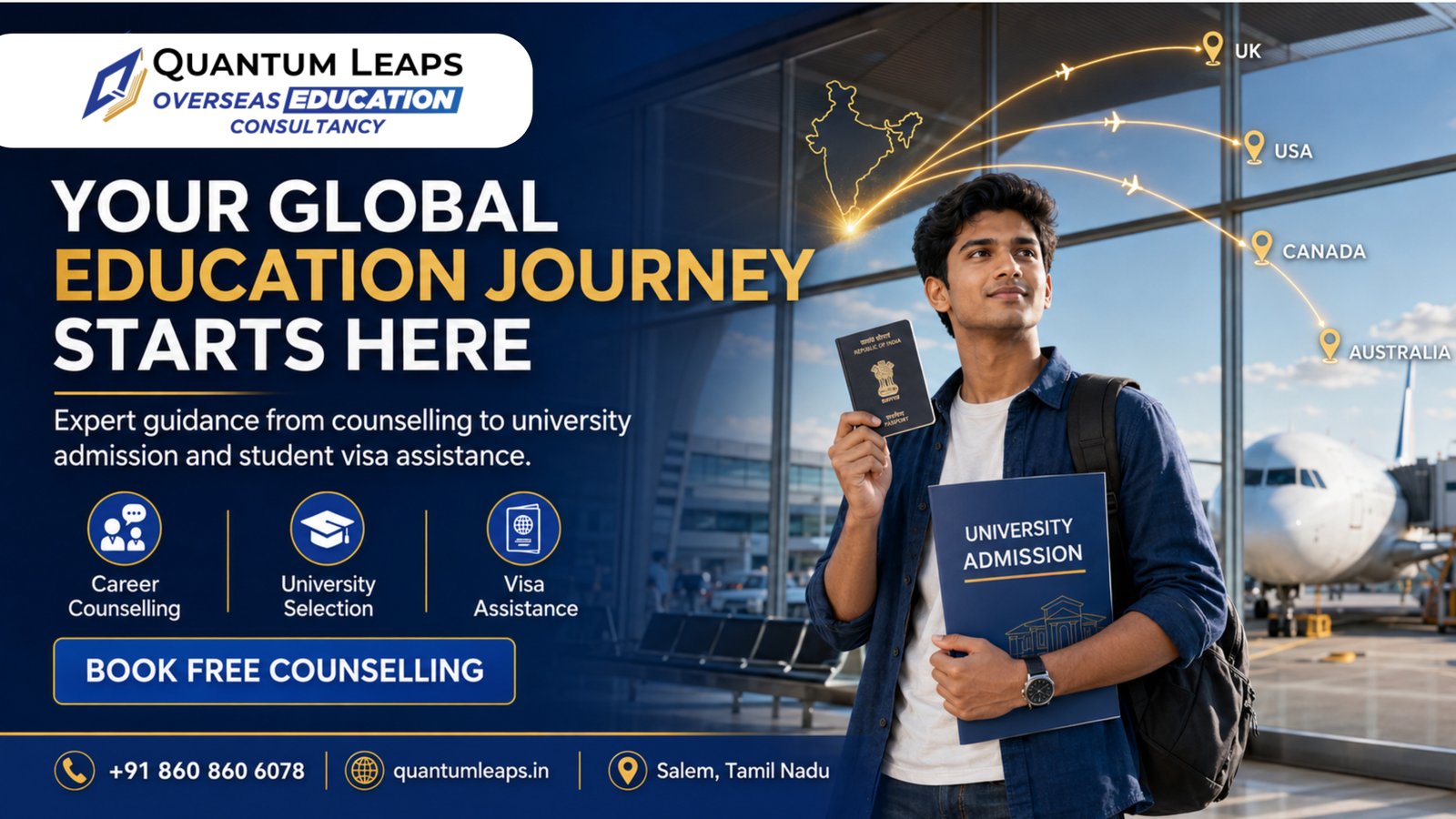
Student Visa Consultancy for Master’s Degree Applicants by Quantum Leaps
A master’s degree abroad can help students deepen their subject knowledge, build international exposure, and prepare for new career opportunities. After receiving a university offer, however, many students discover that the next step feels just as important as admission: the student visa process.
Visa applications require careful preparation. Students must understand the requirements for their destination, arrange documents, show financial readiness, complete forms accurately, and prepare for any interview or verification process. A small error, unclear information, or missed deadline can create stress at a time when students are already planning their move abroad.
Student visa consultancy for master’s degree applicants by Quantum Leaps helps students approach this stage with structure and clarity. The aim is to help applicants understand the process, organise their documents, and prepare confidently for the requirements set by the relevant authorities.
Expert Tip: Prepare your documents early, but review official visa guidance again just before you apply. Requirements and processes can change.
The Problem: A University Offer Is Only One Part of the Journey
Receiving an offer letter is an exciting milestone, but it does not automatically complete the path to studying abroad. Every destination has its own visa procedures, eligibility requirements, financial documentation rules, timelines, and submission methods.
Many master’s applicants have already spent months preparing for English language tests, university applications, statements of purpose, and academic documents. When the visa stage begins, they may be unsure about the next priority. Should they arrange funds first? Which documents need verification? When should they book an appointment?
Early Student visa consultancy guidance can help applicants arrange these tasks in the right sequence. It also gives students time to resolve missing documents before an important deadline is close.
The Causes: Why Master’s Applicants Face Visa Challenges
1. Requirements Vary by Destination
Students often hear general advice from friends, relatives, or social media. While these experiences can be useful, visa requirements can differ by country, course duration, student profile, and intake. A document accepted for one destination may not meet the requirement for another.
Applicants should rely on current official guidance for their chosen country and use their offer documents as a starting point. A Student visa consultancy discussion can help students identify the requirements they need to verify for their own application.
2. Documentation Is Prepared Too Late
A visa application usually involves several documents gathered from different places. Academic records, passport details, offer letters, financial evidence, health or insurance documents, and other records may all need to be ready within a defined timeline.
Students sometimes wait until an appointment is booked before checking their documents. This can create pressure when a bank letter, certificate, or translation takes longer than expected. Creating a personal checklist early reduces the risk of rushed submissions.
3. Financial Information Is Not Clearly Organised
Financial preparation is a major concern for many families. It is not only about having funds available. Students must understand what evidence is required, whose documents can be used where permitted, and how financial records should be presented.
Incomplete information or inconsistent details can raise questions. Applicants should review the current official requirements carefully and make sure the information in their documents is accurate.
4. Students Underestimate Interview Preparation
Some visa applications include an interview, credibility assessment, or questions about the student’s academic plans. Students may know their course well but still struggle to explain why they selected a particular university, course, or destination.
Clear answers come from genuine preparation. Students should be ready to discuss their academic background, planned course, funding, and future goals in simple language.
The Solutions: Create a Clear Visa Preparation Plan
Step 1: Start with a Personal Visa Timeline
A visa plan should begin as soon as the student has a suitable offer and understands the intended intake. Work backwards from the course start date and note important steps, including document collection, financial planning, appointments, medical requirements where applicable, and travel preparation.
A basic timeline can include:
- University offer acceptance and required deposit
- Passport validity check
- Financial document preparation
- Visa application form completion
- Biometrics or appointment booking, if required
- Interview preparation, if applicable
- Travel and accommodation planning after approval
Quantum Leaps provides guidance for application submission, document verification, interview preparation, and visa processing. Students can use Student visa consultancy support to organise these stages around their individual timeline.
Step 2: Build a Complete Document Checklist
A checklist helps students see what is complete and what still needs attention. The exact list must be confirmed using the current official requirements for the destination, but students commonly need to prepare academic records, passport information, university documents, financial evidence, and relevant supporting records.
Before submitting anything, check:
- Is every document current and readable?
- Do names, dates, and passport details match across documents?
- Are translations or certifications required?
- Does the application form match the supporting evidence?
- Are original documents and copies arranged as required?
A Student visa consultancy session can help applicants create a practical checklist, but students should always confirm official requirements before submission.
Step 3: Prepare Financial Documents Carefully
Financial documents should show a clear and honest picture of how the student’s education and living expenses will be funded. Families should start these conversations early so that they understand their available funds, education loan plans where relevant, and the required supporting records.
Students should avoid making assumptions about financial rules. Requirements can change, and each destination may specify the form, period, and source of evidence it accepts. Keep copies of all documents and retain records of payments made to the university.
Student visa consultancy guidance can help students understand what to prepare, while official immigration sources remain the final reference for each requirement.
Step 4: Complete the Application With Accuracy
A visa form may contain simple questions, but every answer matters. Incorrect dates, incomplete travel history, or details that conflict with other documents can delay the process. Students should take their time and review each section before submitting.
It is useful to keep one folder with the final versions of all uploaded documents and confirmation pages. This makes it easier to answer future queries or prepare for an interview.
Students can explore Student visa consultancy support when they need help arranging their application documents clearly.
Step 5: Prepare for the Interview With Honest Answers
Visa interviews are an opportunity to explain the purpose of study in a clear and consistent way. Students should never memorise answers that do not reflect their own plans. Instead, they should practise explaining their decisions naturally.
Key topics to prepare include:
- Why did you choose this master’s course?
- Why did you choose this university and country?
- How does the course connect to your previous studies?
- How will you fund your education and living costs?
- What are your career goals after completing the degree?
A Student visa consultancy session can help applicants practise structured answers and become more comfortable speaking about their plans.
Expert Tips for Master’s Applicants
Keep Every Detail Consistent
Your university application, visa form, financial records, and interview answers should tell the same genuine story. Check names, dates, course details, and funding information before every submission.
Do Not Leave Questions Unanswered
If you are unsure about a document, a financial record, or a form field, identify the correct source of clarification before submitting. A rushed answer can be harder to correct later.
Use Student visa consultancy guidance to organise your questions, then verify any official requirement directly with the relevant authority.
Keep Digital and Printed Copies
Save copies of your passport, offer letter, fee payment records, application form, financial documents, visa confirmation, and accommodation details. Store them securely and keep essential printed copies during travel.
Plan for Life After Visa Approval
Visa approval is a major achievement, but students should also prepare for arrival. Confirm accommodation, travel arrangements, university orientation, local transport, banking options, and important contact details.
Students can discuss their next steps through Student visa consultancy support as they prepare for their move.
Conclusion: Prepare Your Visa Application With Confidence
A master’s degree abroad begins with a clear academic goal, but the visa process requires equal attention. Students who start early, organise documents, prepare financial evidence carefully, and verify current requirements are better placed to handle the process confidently.
If you have received a university offer or are planning for a future master’s intake, connect with Quantum Leaps for Student visa consultancy guidance. A structured conversation can help you understand the next steps and prepare your application with greater clarity.